
"Grade 2"
7000 article(s) found
How did Sidamo Honey Coffee come from? how to divide the grades of Sidamo coffee beans?
Professional barista communication please follow coffee workshop (Wechat official account cafe_style) washing: Grade-1;Grade-2 (G1G2) sun: Grade-1 and Grade-3Grade-5 (G1G3G4G5) production area: Ethiopia Oromia species: Ethiopia native species Haiba: 2000 treatment: washing factory name: coffee workshop site: Guangzhou Yuexiu Museum District Security
Old Ethiopian grading standards--Definition of grading for washing and solarization
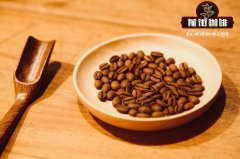
Professional coffee knowledge exchange More coffee bean information Please pay attention to coffee workshop (Weixin Official Accounts cafe_style) Ethiopia old classification standard Ethiopian coffee beans are generally divided into five levels, according to washing and sun treatment for G1, G2, G3, G4, G5, the first and second levels for washed coffee beans, and sun coffee beans according to coffee quality is divided into G3,G4,G5 three and so on

How to determine the investment budget of the cafe
1. Determine the positioning of the coffee shop after detailed market research, determine the management grade and product pricing according to the consumption capacity of the business area where the coffee shop is located, and estimate the per capita consumption capacity of customers entering the coffee shop. 2. estimated turnover according to per capita consumption capacity, number of seats in cafes, occupancy rate and business days, monthly turnover can be estimated according to the following formula

Strong fruit flavor of Yega Chefevoca Coffee Flavor description Variety treatment method Grinding degree
The grading system of Ethiopian coffee is not based on the number of items, but on the proportion of defective beans in raw beans. In October 2009, Ethiopia launched the ECX boutique coffee trading grading system. Through the evaluation of raw beans, Q-Grader made the following grades: washed Yega Xuefei is divided into two grades: Grade 1 and Grade 2, sun Yega Xuefei is divided into Grade 1,

Classification and causes of defective beans in Fine Coffee SCAA
The growth environment of boutique coffee beans also has higher requirements. Generally grow at an altitude of 1500 meters or even more than 2000 meters above sea level, with appropriate precipitation, sunshine, temperature and soil conditions. Some world-famous coffee beans also have a special geographical environment, such as the alpine clouds in the Blue Mountains, the free shade provided by the afternoon clouds in Kona, and the volcanic ash soil in Antigua.
How to determine the investment budget of a coffee shop
1. Determine the positioning of the coffee shop after detailed market research, determine the management grade and product pricing according to the consumption capacity of the business area where the coffee shop is located, and estimate the per capita consumption capacity of customers entering the coffee shop. 2. estimated turnover according to per capita consumption capacity, number of seats in cafes, occupancy rate and business days, monthly turnover can be estimated according to the following formula
Citrus-flavored Yejassefi Coffee Manor: an introduction to the flavor and taste of Cochel Manor
The grading system of Ethiopian coffee is not based on the number of items, but on the proportion of defective beans in raw beans. In October 2009, Ethiopia launched the ECX boutique coffee trading grading system. Through the evaluation of raw beans, Q-Grader made the following grades: washed Yega Xuefei is divided into two grades: Grade 1 and Grade 2, sun Yega Xuefei is divided into Grade 1,

Grade of Ethiopian coffee | ECX rating and scoring criteria? Special selection of ECX in Yega Xuefei producing area
Professional coffee knowledge exchange more coffee bean information please follow the coffee workshop (Wechat official account cafe_style) the grade of Ethiopian coffee | ECX grading and scoring criteria? Yega Xuefei production area ECX specially selected washing G1 flavor? Ethiopian washed coffee Yega Chuefei G1 G2, the highest levels of Cedamo (Yirgacheffe, Sidamo) are level 2 and 3 (G2, G3)

Description of taste and flavor of Yejiaxuefei Coffee introduction to the regional treatment method of grinding scale production
Yega Chuefei coffee features taste description grinding scale production area treatment method most coffee beans are washed, but a small number of absolute crystal beans deliberately use the sun method to enhance the charming fruit aroma and mellow thickness. These mountain villages are foggy, like spring all year round, with a gentle breeze in summer, cool but not hot, rain but not damp, and no cold damage in winter, giving birth to unique oranges and flowers.

How did Sidamo Shakiso Coffee come from? how do you grade Sidamo coffee beans?
For the exchange of professional baristas, please follow the coffee workshop (Wechat official account cafe_style) [factory introduction] Shakisso/Shakiso is located in the Guji region of Oromia, close to Sidama and Gedeo. There are many pits in this area, which were used to mine gold in the early days, so there are many pits in this coffee growing area.
Species Morphology and Variety Grade History of Colombian Coffee
The main varieties of Colombian coffee are small grains of coffee. Plants are small trees or large shrubs, 5-8 m tall, usually much branched at base; old branches gray-white, nodes dilated, young branches glabrous, compressed. Leaves thinly leathery, ovate-lanceolate or lanceolate, 6-14 cm long and 3.5-5 cm wide, tip long acuminate, acuminate part 10-15 mm long, base cuneate or slightly obtuse, rarely rounded, entire or

Summary of coffee bean grade classification in various countries formulation and grade classification of coffee producing countries
In the Qianjie coffee factory, each batch of new beans received, there will be information about these beans, coffee producing country, altitude, manor, treatment, and the grading of coffee to be mentioned today, such as Kenya PB, Yega G1, so what does these grading letters mean? in fact, coffee grading standards vary from country to country and from region to region.

Quality of Colombian coffee grade producing area
The history of coffee cultivation in Colombia can be traced back to the Spanish colonial era in the 16th century, and there are many theories about the history of coffee in Colombia: one: it is said to come from the island of Haiti in the Caribbean and from El Salvador in Central America. Second: in 1808, a priest introduced coffee beans to Colombia for the first time from the French Antilles via Venezuela. One of them
Q-Grader examination experience and examination form Coffee examination Notes
There are 8 major items and 20 subjects in the Q-Grader examination. The first major item (4 subjects) was tested together in 2 subjects, with a time limit of 1 hour; the second major item (1 subject) was graded for 1 hour; the third major item (2 subjects) was graded for cooked beans; the fourth major item (1 subject) was limited to 1 hour for organic acid; the fifth item (3 subjects) was limited for 1 hour; and the sixth major item (3 subjects) was limited for 1 hour.

The grade of Ethiopian coffee in Ethiopian coffee producing areas
The grade of Ethiopian coffee: Ethiopian water washed coffee Yega Xuefei, the highest grade of Yirgacheffe and Sidamo may be level 2 or 3 (G2 or G3), and most sun-processed coffee in eastern Ethiopia is grade 4 or 5 (G4, G5). In many cases, level 4 coffee is marked as level 5 in order to reduce taxes. The current classification is not very uniform.

Wild taste Yega Xuefei Aduo boutique coffee bean cultivation geographical location, climate, altitude simple
The grading system of Ethiopian coffee is not based on the number of items, but on the proportion of defective beans in raw beans. In October 2009, Ethiopia launched the ECX boutique coffee trading grading system. Through the evaluation of raw beans, Q-Grader made the following grades: washed Yega Xuefei is divided into two grades: Grade 1 and Grade 2, sun Yega Xuefei is divided into Grade 1,

A brief introduction to the description of the flavor and aroma characteristics of the boutique coffee beans full of softness.
The highest grades of Sidamo (Yirgacheffe, Sidamo) are Grade 2 and Grade 3 (G2 and G3), and most of the sun-processed coffees in eastern Ethiopia are Grade 4 or Grade 5 (G4 and G5). In many cases, level 4 coffee is marked as level 5 in order to reduce taxes. At present, the grading is not uniform and messy, because there are primary and secondary sun processing (Grand G).

Full of soft Yega Xuefei Aduo boutique coffee beans planting geographical location, climate, altitude is simple.
4. The grading system of grade Ethiopian coffee is not based on the number of items, but on the proportion of defective beans in raw beans. In October 2009, Ethiopia launched the ECX boutique coffee trading grading system. Q-Grader rated raw beans as follows: washed Yega Xuefei was divided into Grade 1 and Grade 2, and Solar Yega Xuefei was classified as G

Sour balanced Brazilian coffee beans Features and stories Three grades of Brazilian coffee beans
Harvest year: 2012-The year is for roasters 'reference, so it is not usually indicated on the label of roasted coffee beans sold in the market. In order to reduce the purchase trouble and identification burden of consumers, coffee beans sold in the market generally do not make such complicated labels. Different small producing areas, different years of coffee bean flavor may have a lot of difference

Characteristics of aricha Coffee washed by Yejiaxuefei Water
Professional barista communication please pay attention to the coffee workshop (Wechat official account cafe_style) Yejia Xuefei is divided into two categories according to the different ways of handling raw coffee beans: category An is washed, the grade standard is set by the American Fine Coffee Association SCAA, the score is Gr-1;Gr-2, the smaller the Arabic numeral, the higher the grade, the G1 Yega Xuefei style is distinct, and the citrus flavor and floral flavor are mixed in the coffee liquid.